Decoding Related-Party Transactions: A Comprehensive Guide to Tesla’s $573 Million Corporate Web
Overview
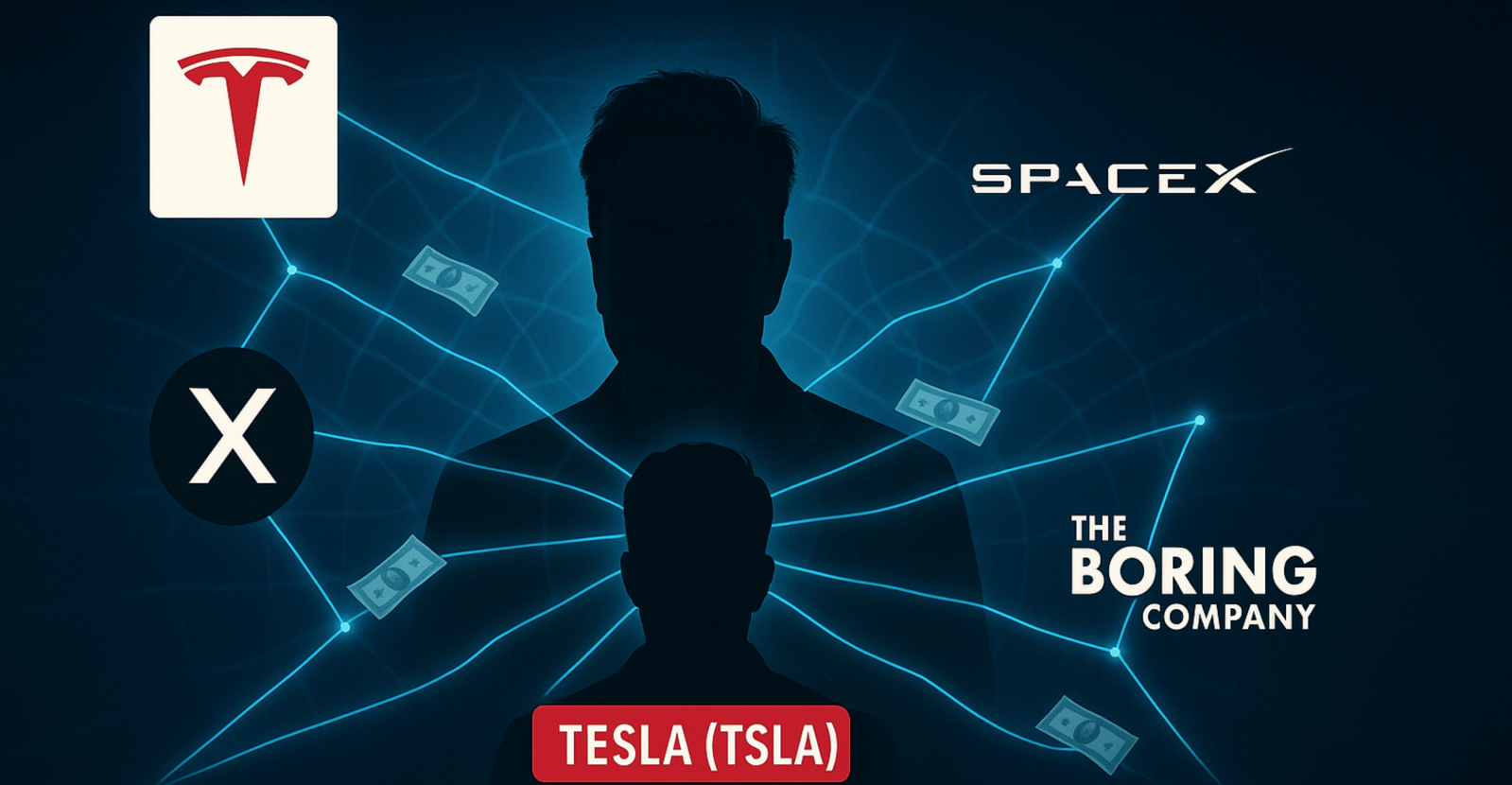
When a company’s CEO also runs several other businesses, financial transactions between those entities—known as related-party transactions—can raise eyebrows. Tesla’s (TSLA) amended annual filing (10-K/A), submitted to the SEC on April 30, revealed the full scale of financial interconnections between Elon Musk’s companies. The filing disclosed $573 million in revenue that Tesla earned from SpaceX and xAI, plus tens of millions more in expenses flowing to X (formerly Twitter), The Boring Company, and Musk’s personal security firm. This guide will walk you through how to identify, analyze, and understand related-party transactions in corporate filings, using Tesla’s 10-K/A as a real-world case study. By the end, you’ll be able to spot similar patterns in any company’s disclosures and evaluate their potential impact on corporate governance and shareholder value.
Prerequisites
Before diving into the analysis, ensure you have the following:
- Basic knowledge of corporate financial statements – Understanding of income statements, balance sheets, and cash flow statements.
- Familiarity with SEC filings – Know the difference between 10-K (annual report), 10-Q (quarterly), and 10-K/A (amended filing).
- Access to SEC EDGAR database – To view the actual filing (search for Tesla’s 10-K/A filed April 30).
- Interest in corporate governance – Related-party transactions often raise governance red flags, so a willingness to think critically about conflicts of interest is helpful.
- Optional: Financial modeling skills – For deeper quantitative analysis of transaction trends over time.
Step-by-Step Instructions
Step 1: Locate the Original Filing
Go to the SEC’s EDGAR database (www.sec.gov/edgar). Search for Tesla Inc. (CIK: 0001318605) and locate the 10-K/A filed on April 30. The filing number is typically a series of letters and numbers. Open the HTML or text version to view the full content.
Step 2: Find the Related-Party Transactions Section
In any 10-K or 10-K/A, related-party transactions are disclosed in a specific section, usually under “Certain Relationships and Related Transactions” or “Transactions with Related Persons.” In Tesla’s amended filing, this appears near the end. Use your browser’s search function (Ctrl+F) and type “related party” or “related person” to jump to the relevant pages.
Step 3: Understand the Revenue Side ($573M from SpaceX and xAI)
Tesla reported receiving a total of $573 million in revenue from SpaceX and xAI alone. This includes payments for services, equipment, or licensing. For example, Tesla may have supplied batteries, solar panels, or consulting to SpaceX. To grasp the magnitude, compare this to Tesla’s total revenue (over $96 billion in 2024). This $573M represents about 0.6% of total revenue—small but not negligible.
Dig deeper: Look for footnotes that break down what specific products or services were provided. In the filing, you’ll see line items for “revenue from SpaceX” and “revenue from xAI.” Note any changes from previous years—this is your first clue about whether the relationship is growing.
Step 4: Analyze the Expense Side (Payments to X, Boring Company, Security Firm)
Tesla also incurred significant expenses with Musk’s other entities:
- Payments to X (Twitter) – Likely for advertising, data licensing, or cloud services. The filing shows millions flowing out.
- The Boring Company – For tunnel construction services or equipment.
- Personal security firm – Musk’s own security detail, contracted by Tesla to protect the CEO (a common but controversial practice).
Total expenses from these three entities, combined with others, add up to tens of millions. The exact breakdown is available in the filing’s tables. Important: Compare these expenses to what Tesla might have paid an unaffiliated third party—is Tesla overpaying or getting fair market value?
Step 5: Check for Fairness and Policies
Look for any statement about the “fairness” of these transactions. Companies often include a note that the Audit Committee or a special committee reviewed the deals and concluded they were on terms no less favorable than those available from unrelated parties. In Tesla’s case, the filing likely states that the transactions were approved by the Audit Committee. However, scrutiny is warranted because Musk holds significant control over both sides.
Step 6: Quantify the Total Web
Add up all related-party transactions disclosed. The top line: $573M revenue from SpaceX and xAI, plus expenses to X, Boring Co., and the security firm. The filing may also include smaller transactions with other Musk-linked entities (e.g., SolarCity before the merger, but that’s now part of Tesla). The total financial web exceeds $600 million when including both sides. This demonstrates a dense network of cross-company dealings.
Step 7: Cross-Reference with Previous Filings
For a deeper analysis, pull Tesla’s previous 10-K filings (2019–2023). Compare the amounts year over year. Are the related-party transactions increasing faster than Tesla’s revenue? A trend of growing related-party revenue might signal Musk is channeling business to his own companies rather than outside vendors—a potential conflict.
Step 8: Assess Governance Risks
From an investor perspective, these transactions create governance risks:
- Self-Dealing – Musk could benefit personally if his companies charge Tesla above-market rates.
- Lack of Arm’s-Length Bargaining – Teslas’ side of the transaction may not be aggressively negotiated.
- Opacity – Despite the disclosure, the level of detail may still hide unfair terms.
Review the filing for any mention of minority shareholder protections or waivers. Also, check if any of these transactions required a majority-of-minority shareholder vote—often not required but advisable.
Common Mistakes
Mistake 1: Assuming all related-party transactions are bad. Some are ordinary course business, like Tesla buying advertising on X. The key is to evaluate the terms, not automatically distrust.
Mistake 2: Focusing only on revenue and ignoring expenses. Both sides matter. Tesla’s revenue from SpaceX shows cash coming in, but the expenses to X show cash going out. Net effect?
Mistake 3: Overlooking the amended filing nature. This is a 10-K/A—an amendment to the original 10-K. Why was it amended? Possibly to provide more detail after initial criticism. Always read the reason for the amendment.
Mistake 4: Not verifying totals yourself. Headlines like “$573M” can be misleading. That figure includes both revenue and expenses? In this case, it’s specifically revenue from two entities. Double-check the filing’s own summary.
Mistake 5: Ignoring smaller transactions. Other entities like Neuralink or The Musk Foundation may appear with smaller amounts. They still constitute related-party dealings.
Summary
Tesla’s amended 10-K/A filing provides a window into the intricate financial connections linking Elon Musk’s corporate empire. By following the steps above, you can systematically analyze related-party transactions: locate the section, break down revenue vs. expenses, assess fairness, and consider governance risks. The key takeaway: $573 million in revenue from SpaceX and xAI and millions in expenses to X, The Boring Company, and Musk’s security firm collectively represent a web of dealings that demands investor vigilance. Understanding these disclosures helps you evaluate whether a company’s management is acting in the best interest of all shareholders or potentially favoring the CEO’s other interests.
Related Articles
- Preserving the Human Glue: A Guide to Balancing AI Efficiency with Team Connection
- Python Environments Extension for VS Code: April 2026 Update - Q&A
- Decoding Cambrian Fossils: A Guide to Understanding Early Life's Greatest Treasure Trove
- Tracking the Invisible: A Step-by-Step Guide to NASA and Space Force's Ring Current Mission
- Space Station Fresh Food Delivery: Your Questions Answered
- Amid AMOC Collapse Fears, Scientists Propose Bering Strait Dam as 'Drastic' Solution
- New Tool Pinpoints Which AI Agent Crashed the Mission: Researchers Unveil 'Who & When' Dataset to Debug Multi-Agent Failures
- Beyond One Study: How Science Really Informs Your Diet