Guide to Fabricating and Relocating Spin Qubits in Semiconductor Quantum Dots
Overview
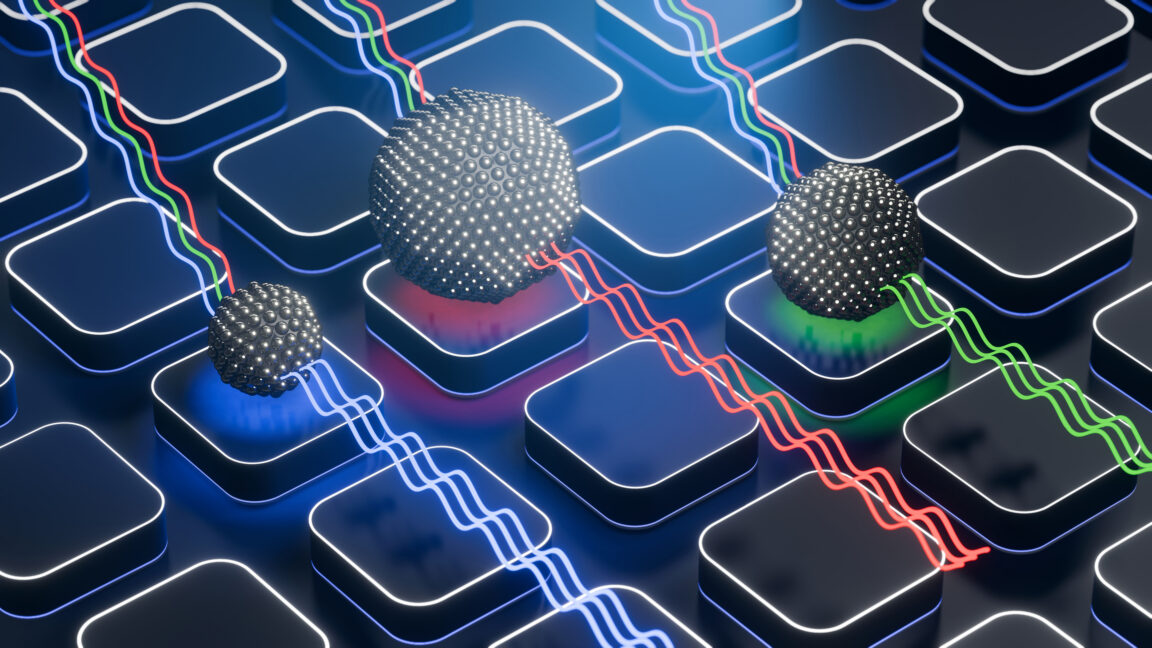
Quantum computing promises to revolutionize computation, but building a large-scale, error-corrected quantum processor remains a formidable challenge. One of the key obstacles is creating a large number of high-quality qubits that can be interconnected flexibly. Broadly, two approaches have emerged: hosting qubits in solid-state electronic devices (which are scalable to mass production but suffer from fixed wiring) or using natural atoms or ions (which offer pristine, consistent behavior and the ability to be physically moved). Recently, a breakthrough has demonstrated a way to combine the best of both worlds by using quantum dots—tiny semiconductor structures that can be manufactured in bulk—and showing that the spin of a single electron trapped in a quantum dot can be moved from one dot to another without losing its quantum information. This tutorial provides a detailed, step-by-step guide to understanding the concept, the prerequisites for such a system, the actual process of moving spin qubits, common pitfalls, and a summary of the significance.
Prerequisites
Before diving into the step-by-step instructions, ensure you understand the following foundational concepts:
- Quantum dots: Nanometer-scale semiconductor structures that confine electrons or holes in three dimensions, creating discrete energy levels like artificial atoms.
- Spin qubit: A qubit encoded in the spin state (up/down) of a single electron or hole. Typically manipulated via electron spin resonance or exchange coupling.
- Quantum tunneling: The ability of a particle to pass through a potential barrier due to its wave nature; essential for moving electrons between dots.
- Coherence and decoherence: The preservation of quantum information over time; decoherence is the loss of that information due to interactions with the environment.
- Gate operations: Electrical pulses that control the potential landscape of the quantum dot array, enabling qubit initialization, manipulation, and readout.
You should also have a basic familiarity with semiconductor fabrication techniques (e.g., lithography, molecular-beam epitaxy) and cryogenic environments (millikelvin temperatures) needed for quantum dot operation.
Step-by-Step Instructions for Fabricating and Moving Spin Qubits
1. Design and Fabricate the Quantum Dot Array
Start by designing a linear or two-dimensional array of quantum dots. Typically, these are formed using a GaAs/AlGaAs heterostructure that contains a two-dimensional electron gas (2DEG). Use electron-beam lithography and metal deposition to create surface gates (plunger gates, barrier gates, and reservoir gates) that define the dots and control electron populations. The spacing between adjacent dots should be on the order of 100–200 nm to allow sufficient tunneling coupling.
2. Cool the System to Millikelvin Temperatures
Place the fabricated chip in a dilution refrigerator with a base temperature below 100 mK. At such low temperatures, thermal energy is negligible compared to the dot charging energy, and the electron spin coherence times become long enough for operations. Ensure proper shielding from electromagnetic interference and vibration.
3. Initialization: Load a Single Electron into Each Quantum Dot
Using appropriate DC voltages on the plunger gates, tune the dot potentials to be in the Coulomb blockade regime—meaning only a discrete number of electrons can reside. For a spin qubit, you need exactly one electron per dot. Adjust the reservoir gate to allow electrons to tunnel in one by one. Measure the current through a nearby quantum point contact to detect charge transitions. Once a dot has exactly one electron, you have a spin qubit (though the spin state is initially random).
4. Single-Qubit Gate Operations (Manipulation and Readout)
To perform a single-qubit gate, apply a local oscillating magnetic field (e.g., via an on-chip microwave antenna) resonant with the electron spin’s Larmor frequency (often in the X-band ~10 GHz). This drives coherent Rabi oscillations between the spin states. For readout, use spin-to-charge conversion: apply a selective tunneling mechanism where the up-spin electron tunnels off to a reservoir faster than down-spin, and measure the resulting change in charge sensor signal. This step is not strictly required for moving qubits but ensures you can verify the qubit’s state before and after movement.
5. Moving the Spin Qubit: The Adiabatic Shuttling Protocol
The core process for relocating a spin qubit from quantum dot A to quantum dot B involves slowly lowering the potential barrier between them while simultaneously raising the trap minima. Follow these sub-steps:
- Set initial conditions: Ensure dot A is occupied with an electron in a known spin state (or just tuned to a single electron). Dot B is empty (no electrons). Both dots are isolated from reservoirs by raising barrier gates.
- Lower the inter-dot barrier: Gradually (over tens of nanoseconds to microseconds) reduce the voltage on the barrier gate between dot A and dot B. This increases the tunneling coupling exponentially.
- Detune the plunger potentials: Simultaneously, slightly lower the plunger gate voltage of dot B relative to dot A, creating an energy bias that favors electron transfer to dot B. The system must be moved adiabatically—slowly enough that the electron remains in its instantaneous ground state, and the spin state is preserved. The condition is that the tunneling time (hbar / tunnel coupling) is much shorter than the speed of the detuning ramp.
- Complete the transfer: Continue ramping until the electron wavefunction is fully localized in dot B. Then raise the barrier again to isolate dot B and prevent back-tunneling.
- Verify: Perform a readout on dot B to confirm that the spin state is unchanged (or measure after a known gate operation to test coherence). If the process is perfect, the qubit has moved without loss of information.
You can extend this to multiple dots in sequence, enabling “any-to-any” connectivity similar to trapped ions.

6. Entangling Two Spin Qubits via Exchange Interaction
Once you can move spins, you can bring two qubits into neighboring dots and perform a two-qubit gate. Lower the barrier between two adjacent occupied dots to activate exchange coupling (Heisenberg Hamiltonian J S1·S2). By pulsing this coupling for a specific duration (e.g., a √SWAP gate), you create entanglement. This step is the key to building error-corrected logical qubits.
Common Mistakes and How to Avoid Them
- Shuttling too quickly (non-adiabatic errors): If the detuning ramp is too fast, the electron may undergo Landau-Zener transitions to higher orbital states, flipping the spin (due to spin-orbit coupling) or causing leakage. Solution: use a slower ramp or a multi-step process (e.g., sequential detuning and barrier modulation).
- Charge noise causing dephasing: Fluctuations in background charge can shift dot potentials and cause random phase evolution. Use dynamical decoupling pulses on the spin (e.g., CPMG sequence) during shuttling, or operate at “sweet spots” where charge noise has minimal effect.
- Unintended occupation changes: During barrier lowering, an extra electron from the reservoir might sneak in. Solution: ensure reservoir gates are fully pinched off before shuttling, and carefully calibrate voltages.
- Coherence loss from spin-orbit interaction: During movement, the electron’s spin may couple to its orbital motion, leading to spin flips. Use materials with weak spin-orbit coupling (like silicon) or apply compensating magnetic fields.
- Insufficient tunnel coupling: If the dots are too far apart or barrier voltages are too high, the tunneling time exceeds the coherence time. Fabricate dots with closely spaced gates or use a series of intermediate dots as relays.
Summary
This guide has walked you through the fundamental concept, prerequisites, and detailed steps for fabricating quantum dots and moving spin qubits between them without losing quantum information. By combining the manufacturability of solid-state qubits with the reconfigurable connectivity of atomic systems, this approach addresses a critical bottleneck in quantum computing scalability. The ability to shuttle individual electron spins across a quantum dot array opens the door to all-to-all entanglement and more efficient error correction. As manufacturing techniques improve and noise mitigation advances, such “moveable spin qubits” are poised to become a cornerstone of practical quantum processors.
For further reading, explore the original research articles on adiabatic shuttling in GaAs and silicon quantum dots. The key takeaway: moving qubits is feasible, and it brings us one step closer to large-scale, fault-tolerant quantum computing.
Related Articles
- Breaking: Samsung Galaxy S26 One UI 9 Beta Goes Live in Three Countries
- 10 Reasons Why This Japanese Luxury SUV Outlasts the Competition Without Breaking the Bank
- 7 Key Reasons Microsoft Leads API Management in 2026 (IDC MarketScape)
- How Flight Recorder in Go 1.25
- Why Most Frequently Asked Questions About NFTs(Non-Fungible Tokens)
- Why Choosing a Smart Home Platform Beats Buying a Hub First
- Should You Build an AI Chatbot of Your Ex? The Surprising Truth
- How to Decode Apple’s Earnings Calls: Spotting Delayed Product Launches